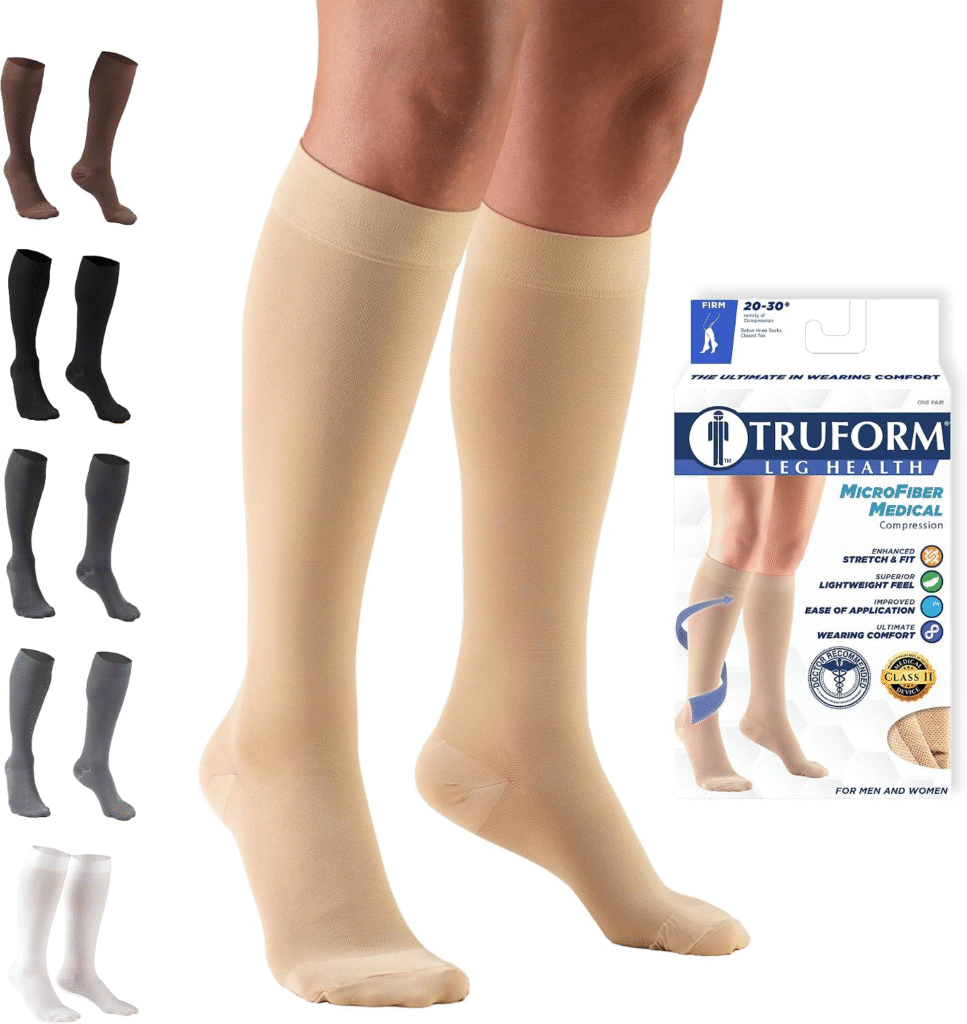
Varicose veins can cause more than just visible, twisted veins on the legs. Many people experience aching, heaviness, swelling, itching, or tired legs after standing or sitting for long periods. One of the commonly recommended ways to manage these symptoms is wearing compression stockings for varicose veins.
Compression stockings are designed to apply controlled pressure to the legs, helping blood move upward toward the heart. When used correctly, they can provide everyday support and may help reduce some of the discomfort associated with varicose veins.
What Are Compression Stockings?
Compression stockings are specially designed socks that provide graduated pressure around the legs. They are generally tighter around the ankle and gradually become less tight higher up the leg.
This pressure supports the veins and helps improve the movement of blood back toward the heart. Unlike ordinary socks, compression stockings are made with specific levels of pressure and materials designed for consistent compression.
They come in different lengths, including knee-high, thigh-high, and full-length styles, making it possible to choose an option based on individual needs.
How Do Compression Stockings Help Varicose Veins?
Varicose veins can develop when valves inside the veins do not work properly, allowing blood to collect in the legs. This can contribute to swelling and increased pressure within the veins.
Compression stockings can provide external pressure that helps support circulation in the lower legs. For some people, this may reduce symptoms such as:
- Leg swelling
- Aching or discomfort
- A feeling of heaviness
- Tired legs
- Mild discomfort after prolonged standing
- An uncomfortable feeling around varicose veins
Compression stockings do not remove existing varicose veins, but they may help manage symptoms and support better circulation.
Choosing the Right Compression Level
One of the most important factors when choosing compression stockings for varicose veins is the compression level.
Compression is commonly measured in mmHg, which stands for millimeters of mercury. Different compression levels provide different amounts of pressure.
Mild compression may be suitable for everyday leg support, while stronger compression may be recommended for certain vein-related problems. However, stronger does not automatically mean better.
If you have significant varicose veins, persistent swelling, skin changes, or other circulation concerns, it is best to ask a healthcare professional which compression level is appropriate for you.
Knee-High vs. Thigh-High Compression Stockings
Compression stockings are available in several styles.
Knee-high stockings extend from the foot to just below the knee. They are often convenient for everyday wear and may be suitable when symptoms mainly affect the lower legs.
Thigh-high stockings extend higher up the leg and may be considered when symptoms or swelling involve the thigh area.
The best option depends on where your symptoms occur, your comfort preferences, and professional recommendations.
How to Wear Compression Stockings Correctly
Putting compression stockings on correctly can make a significant difference in comfort.
It is generally easier to put them on in the morning, before significant swelling develops. Make sure the stocking is distributed evenly across the leg rather than bunched up in one area.
Avoid folding the top of the stocking downward because this can create an unnecessarily tight band around the leg.
The stocking should feel snug, but it should not cause severe pain, numbness, unusual discoloration, or significant discomfort.
When Should You Wear Compression Stockings?
Many people wear compression stockings during the day and remove them before going to bed. They can be particularly useful during activities that involve prolonged standing or sitting.
For example, someone who spends several hours working on their feet may find compression stockings helpful for managing feelings of tiredness and heaviness in the legs.
Similarly, people who sit for extended periods may use them as part of a broader approach to supporting healthy circulation.
Your healthcare professional may recommend a different wearing schedule depending on your individual situation.
Are Compression Stockings Comfortable?
Modern compression stockings are available in different fabrics, thicknesses, lengths, and designs. Choosing the correct size is essential.
A stocking that is too loose may not provide the intended compression, while one that is too tight can be uncomfortable.
Look for stockings that fit securely without digging into the skin. Measuring your legs according to the manufacturer’s instructions can help you select the appropriate size.
If you’re buying your first pair, choosing a reputable product and checking the sizing guide carefully can make the experience much more comfortable.
Compression Stockings Are Not a Cure for Varicose Veins
It’s important to understand what compression stockings can and cannot do.
They may help manage symptoms, but they generally do not eliminate existing varicose veins. If varicose veins are causing significant pain, skin changes, ulcers, bleeding, or persistent swelling, medical evaluation may be appropriate.
A healthcare professional can assess the veins and discuss whether additional treatment is needed.
Who Should Be Careful With Compression Stockings?
Compression stockings are not appropriate for everyone. Certain circulation problems, particularly conditions involving reduced blood flow to the legs, may require medical assessment before compression is used.
If you have a diagnosed circulation disorder, unexplained leg swelling, significant skin changes, or other concerning symptoms, speak with a healthcare professional before choosing a compression level.
You should also seek medical advice if one leg suddenly becomes swollen, painful, warm, or noticeably different from the other, as these symptoms can have causes that require prompt evaluation.
Other Ways to Support Leg Health
Compression stockings work best as part of a healthy routine rather than as the only strategy for managing varicose-vein symptoms.
Regular movement can help prevent long periods of inactivity. Walking, changing positions, and avoiding sitting or standing in one position for extended periods may support normal circulation.
Elevating the legs when resting may also help some people with swelling.
Maintaining a healthy weight and following advice from a healthcare professional can provide additional support for overall vascular health.
Final Thoughts
Compression stockings for varicose veins can be a practical option for people looking to manage symptoms such as swelling, aching, heaviness, and tired legs. Their graduated pressure is designed to support blood flow from the lower legs toward the heart.
The key is choosing the right size, compression level, and style for your needs. Compression stockings are not a cure for varicose veins, and people with significant symptoms or circulation concerns should seek professional advice before using them.
With the right fit and proper use, compression stockings can become a simple part of a daily routine for supporting more comfortable legs.
