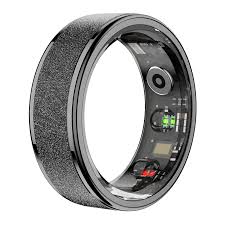
Wearable technology continues to evolve as people look for practical ways to monitor everyday activity, understand their sleep habits, and stay connected with their personal health goals. While smartwatches remain popular, smart rings are attracting attention because they offer a compact alternative without requiring users to wear a large screen on their wrist. These small devices can provide useful activity and wellness information while fitting naturally into everyday life.
The Colmi R10 is one option for people exploring affordable smart-ring technology. Its appeal lies in its ring-shaped design, portable form, and focus on everyday tracking features. For UK consumers, choosing a smart ring involves considering comfort, compatibility, available monitoring functions, battery performance, and overall value for money.
This review explores the design, features, everyday convenience, potential advantages, and important purchasing considerations associated with the Colmi R10. It also examines what shoppers should look for when comparing a budget smart ring with heart rate tracking against more expensive wearable devices.
Understanding the Colmi R10 Smart Ring UK Market
The UK wearable technology market includes fitness bands, smartwatches, health-monitoring accessories, and increasingly compact devices such as smart rings. Each category offers a different balance of comfort, functionality, and price.
Smart rings appeal to people who want wearable technology that does not dominate their appearance or require frequent interaction with a screen. Because they sit on a finger, they can potentially collect certain movement and physiological measurements while remaining relatively unobtrusive.
The Colmi R10 smart ring UK search is particularly relevant to shoppers comparing accessible wearable devices. However, before buying any model, consumers should distinguish between advertised specifications, independently verified performance, and features that may depend on a compatible smartphone application.
The exact functions, battery specifications, water-resistance rating, supported operating systems, and included accessories should be confirmed for the particular Colmi R10 version being sold. Retailer listings can differ, so checking the precise model information is an important part of the purchasing process.
Design and Everyday Appearance
One of the main attractions of smart rings is their compact design. Unlike traditional smartwatches, which occupy a noticeable area of the wrist, a ring can blend more easily with everyday accessories.
For people who prefer understated technology, this form factor may be particularly appealing. A smart ring can be worn with casual clothing, office attire, or other everyday outfits without the visual presence of a large digital display.
A Compact Alternative to Smartwatches
A ring-shaped wearable offers a different experience from a wrist-based device. It does not need a large screen because much of its information is typically viewed through a smartphone application.
This arrangement can be useful for people who dislike checking notifications or fitness information directly on their wrist throughout the day. Instead, they can review supported measurements when they choose to open the companion app.
However, the smaller size also creates practical limitations. Smart rings generally have less room for batteries, sensors, and controls than smartwatches. They may therefore offer fewer interactive functions and less detailed on-device feedback.
Comfort and Ring Sizing
Comfort is essential because a wearable ring may remain on the finger for extended periods. A ring that feels too tight can become uncomfortable, while one that is too loose may move around and affect sensor contact.
Before purchasing the Colmi R10, review the seller’s sizing information and compare it with your intended finger. Finger size can change throughout the day because of temperature and other normal conditions, so a comfortable fit matters more than simply choosing the size that looks right.
Pay attention to the ring’s internal shape, thickness, and weight if these specifications are available. People who are not accustomed to wearing rings may need time to adjust to the feeling of a wearable device.
A suitable fit should allow normal finger movement without excessive pressure or slipping. Follow the manufacturer’s instructions regarding removal, cleaning, and situations in which the ring should not be worn.
Exploring the Main Features
Smart rings vary considerably in their capabilities. Some concentrate on sleep and activity tracking, while others provide a wider selection of physiological measurements.
When evaluating the Colmi R10, shoppers should examine the official specifications for the exact model rather than assuming that every feature found in another smart ring is included.
Heart Rate Tracking
Heart rate tracking is a feature many consumers seek when shopping for wearable wellness technology. Optical sensors in compatible devices use light-based measurements to estimate changes in blood flow and calculate heart rate.
For everyday use, heart rate information may help users observe general patterns during rest, movement, and exercise. Looking at trends over time can provide a broader picture of activity than relying on a single reading.
A budget smart ring with heart rate tracking can appeal to consumers who want access to basic wellness information without spending as much as they might on a premium smartwatch.
Nevertheless, measurement accuracy varies with sensor design, ring fit, movement, skin characteristics, and other conditions. Finger-based readings should not automatically be considered equivalent to measurements from medical equipment.
If heart rate monitoring is important to you, verify that the specific Colmi R10 model supports it and check whether the companion application displays continuous measurements, periodic readings, or measurements initiated by the user.
Sleep Monitoring
Sleep tracking is another feature commonly associated with smart rings. Depending on the device, sleep-monitoring functions may use movement and other sensor data to estimate sleep duration and identify broad sleep patterns.
For people interested in improving their routines, a sleep summary can provide a useful starting point. For example, reviewing approximate bedtimes and wake times may help users recognise whether their schedules are consistent.
A ring may be more comfortable for some sleepers than a wristwatch, although comfort depends on individual preferences and the device’s dimensions.
It is important to remember that consumer wearables estimate sleep information rather than providing a definitive clinical assessment. Their sleep-stage classifications may not always match laboratory measurements.
Before choosing the Colmi R10 for overnight use, confirm its sleep-tracking capabilities, how the data is presented, and whether the ring’s fit remains comfortable throughout the night.
Daily Activity Tracking
Activity monitoring can help users understand how much they move during an ordinary day. Depending on the supported functions, a smart ring may record steps, estimate distance, or summarise daily activity.
These measurements can encourage people to pay attention to their movement habits. Someone who spends much of the day sitting, for instance, may use activity summaries as a reminder to take regular movement breaks.
However, step counts and calorie estimates are approximations. They should be interpreted as general indicators rather than perfectly accurate measurements.
When evaluating the Colmi R10, check which activity metrics are actually available and whether the application allows users to view daily, weekly, or longer-term summaries.
Additional Wellness Measurements
Some smart rings advertise additional measurements, such as blood oxygen estimates, skin temperature trends, or other wellness indicators. Availability depends on the individual model and its software.
These functions should not be assumed to be included with every Colmi R10 listing. Verify the product documentation before making a decision based on a particular measurement.
Where such features are available, understand their limitations. Consumer wearable readings are not necessarily medical-grade measurements, and a device may not be suitable for identifying or diagnosing a health condition.
A useful purchasing approach is to prioritise the features you will realistically use rather than paying extra attention to a long list of measurements with unclear practical value.
Smartphone Compatibility and the Companion App
The smartphone application is an important part of the smart-ring experience. Since many rings do not have displays, the app often provides the main interface for reviewing recorded information and adjusting settings.
Before buying the Colmi R10, check which versions of Android and iOS are supported. Confirm that the correct companion application is available in your region and that your smartphone meets its requirements.
Reviewing Your Information
A well-organised companion app can make wearable data easier to understand. Daily summaries, activity histories, and clearly labelled measurements may help users recognise patterns without having to interpret complicated charts.
Consider whether the application explains its metrics clearly and allows convenient access to historical information. Also check whether it requires an account, an internet connection, or particular permissions to operate.
Privacy and Data Management
Wearable devices can collect personal information about activity and wellness. Before connecting a smart ring to your phone, review the app’s privacy policy and understand what information may be collected, stored, or shared.
Check the available controls for account deletion, data access, and app permissions. If privacy is a priority, avoid granting permissions that are unnecessary for the functions you intend to use.
Consumers should also consider how long the manufacturer is likely to support the app and whether software updates are available. The long-term usefulness of a connected device depends partly on its supporting software.
Battery Life and Charging Convenience
Battery performance can significantly affect how convenient a smart ring is to use. Frequent charging interrupts tracking and may create gaps in activity or sleep records.
Because smart rings are compact, their batteries are generally smaller than those in larger wearable devices. Actual battery life depends on battery capacity, sensor activity, connectivity, software behaviour, and individual usage.
For the Colmi R10, consult the manufacturer’s specifications and distinguish between advertised battery life and independently tested performance. A quoted duration may assume particular settings or limited use of certain features.
Establishing a Practical Charging Routine
A predictable charging routine can make a wearable easier to manage. Depending on the manufacturer’s instructions and the ring’s charging method, users may prefer charging it during a convenient period when they do not need tracking.
Check whether the package includes the required charging accessories and whether replacements are available. Also review the expected charging time and any instructions about cleaning or drying the ring before charging.
Battery longevity over months and years is another consideration. Like other rechargeable electronics, a smart ring’s battery may gradually lose capacity with use.
For UK buyers, confirm the charging arrangement and any included power accessories before ordering. This helps prevent unexpected additional costs.
Water Resistance and Daily Wear
A wearable ring may encounter rain, handwashing, perspiration, and other everyday conditions. Its ability to tolerate these situations depends on its specific water-resistance rating and manufacturer guidance.
Do not assume that a ring is suitable for swimming, showering, or prolonged water exposure simply because it is marketed as a wearable fitness device.
Before wearing the Colmi R10 around water, verify the exact rating for your model and understand what the manufacturer permits. Water resistance can also be affected by damage, ageing seals, and improper handling.
It is sensible to follow the supplied cleaning instructions and avoid exposing the ring to chemicals or conditions outside its stated operating limits.
These precautions can help protect the device and reduce the likelihood of avoidable damage.
Is the Colmi R10 Suitable for Exercise?
A smart ring may be useful for monitoring general activity, but its suitability for exercise depends on the available sensors, recording modes, and how securely it fits during movement.
For everyday walking and general activity awareness, basic tracking features may be sufficient for some users. People who participate in structured training, however, may need more detailed workout information.
A smartwatch or dedicated fitness tracker may offer advantages such as an on-device display, physical controls, built-in workout modes, and more accessible real-time feedback.
Ring-based sensors may also experience measurement variation during vigorous movement. If you plan to use a ring during exercise, check the manufacturer’s guidance about wearing it during weightlifting or activities that involve gripping equipment. Removing a ring may be safer for some exercises.
The best choice depends on whether you prioritise simple daily wellness summaries or detailed workout analysis.
Comparing a Budget Smart Ring with Heart Rate Tracking to Other Wearables
The wearable market offers a wide range of products at different prices. Comparing devices according to your needs can help you avoid paying for functions that are unlikely to be useful.
Smart Rings Versus Smartwatches
Smart rings typically prioritise a compact design and discreet wear. Smartwatches often provide larger screens, notifications, interactive controls, and broader exercise features.
A ring may suit someone who wants to check general wellness trends through a smartphone. A smartwatch may be more suitable for a user who prefers seeing workout statistics or notifications directly on the device.
Neither form factor is automatically better for everyone. Comfort, compatibility, sensor performance, and price should guide the decision.
Smart Rings Versus Fitness Bands
Fitness bands generally occupy a middle ground between simple activity trackers and advanced smartwatches. Many provide displays for steps, heart rate, and workout information.
Smart rings may appeal to people who prefer not to wear anything on their wrist. Fitness bands can be easier to interact with because they usually include a screen.
Consider which device you are most likely to wear consistently. A theoretically advanced tracker offers limited practical value if it is uncomfortable or frequently left at home.
Value for Money for UK Shoppers
Price is an important consideration when buying a smart ring. Budget-friendly devices can make wearable technology more accessible, but the initial purchase price does not tell the whole story.
For UK consumers, compare the final checkout price, delivery charges, warranty terms, return conditions, and availability of customer support. When ordering from overseas, also consider any applicable import charges and the practicalities of returning a faulty item.
Review the exact features included at the advertised price. Some products may offer different specifications depending on the version or seller, while certain app functions may change with software updates.
It is also worth checking whether the device requires a recurring subscription. Subscription requirements vary across the smart-ring market, so verify the terms of the specific product rather than assuming all features will remain available without additional payments.
A sensible buying decision balances affordability with compatibility, comfort, reliable support, and the usefulness of the included functions.
Who Should Consider the Colmi R10?
The Colmi R10 may be worth investigating for consumers who are interested in compact wearable technology and want to explore basic wellness tracking.
It could appeal to people who:
- Prefer a ring over a wrist-based wearable.
- Want to explore daily activity and heart rate information, if supported by their model.
- Value a discreet design for work and everyday activities.
- Prefer reviewing data through a smartphone rather than a device display.
- Want to compare lower-cost wearables before considering a premium product.
However, it may not meet every user’s needs. People who require clinically reliable measurements, extensive sports tracking, advanced smartwatch functions, or guaranteed compatibility with a particular application should review alternatives carefully.
The final decision should depend on verified product specifications rather than the appeal of the product category alone.
Tips for Getting the Most from a Smart Ring
Once you have selected a compatible smart ring, a few straightforward habits can improve your experience.
First, follow the manufacturer’s sizing and wearing instructions to support comfortable sensor contact. Second, keep the companion application updated when supported updates are available. Third, review the ring’s cleaning, charging, and water-exposure guidance.
It can also be useful to establish a consistent routine for checking your measurements. Looking at broad trends over several days or weeks is often more informative than reacting to an isolated reading.
Remember that wearable data has limitations. If a reading appears unusual or causes concern, do not rely on the ring alone to make a medical decision.
Finally, focus on the information that genuinely helps you understand your habits. The best wearable is one that fits comfortably into your life and provides information you can use responsibly.
Final Verdict: Is the Colmi R10 Worth Considering?
The Colmi R10 is a product worth researching for shoppers exploring the smart-ring category. Its appeal will depend on the exact model specifications, comfort, supported tracking functions, companion app, and price available to UK buyers.
A compact ring can offer an alternative to wrist-based wearables for people who prefer discreet technology. A budget smart ring with heart rate tracking may be particularly attractive to shoppers who want general wellness information without investing in a more expensive device.
Nevertheless, buyers should verify heart rate monitoring, battery performance, water resistance, phone compatibility, and warranty coverage before purchasing. These details are more useful than relying on broad marketing claims.
Ultimately, the right wearable is one that suits your daily routine, fits comfortably, and provides dependable features at a price you consider reasonable. By comparing specifications carefully and understanding the limitations of consumer tracking technology, UK shoppers can make a more informed decision about whether the Colmi R10 meets their expectations.
