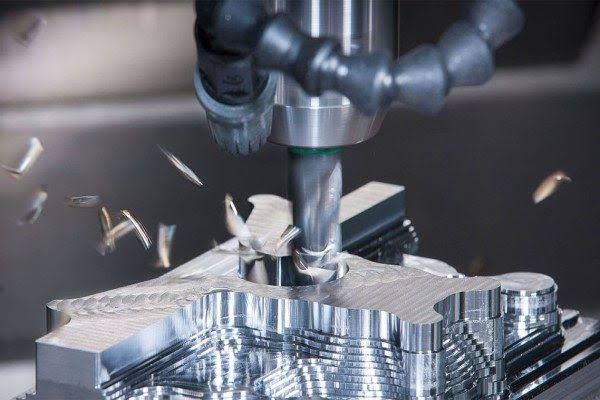
In modern manufacturing, precision plays a major role in product quality, performance, and production efficiency. Industries such as aerospace, automotive, electronics, medical equipment, and industrial machinery require components that meet exact measurements Aluminum CNC Machining Services and tight tolerances. Even a small dimensional error can affect how a component fits, performs, or interacts with other parts. This is where Aluminum CNC Machining Services provide an effective manufacturing solution.
Computer Numerical Control (CNC) machining uses computer-controlled equipment to remove material from an aluminum workpiece and create components according to precise digital designs. The combination of advanced software, automated machinery, and aluminum’s useful properties allows manufacturers to produce accurate and consistent parts for a wide range of applications.
Understanding Aluminum CNC Machining
Aluminum CNC machining involves using CNC machines such as milling machines, lathes, and machining centers to shape aluminum into specific components. A digital CAD model is converted into machine instructions, allowing cutting tools to follow carefully programmed paths.
Unlike manual machining, CNC equipment can perform repetitive operations with a high level of consistency. Once the machine is properly programmed and calibrated, it can produce multiple components with very similar dimensions.
Aluminum is especially suitable for CNC machining because it is relatively lightweight, machinable, and available in different grades. These characteristics make it possible to manufacture complex parts efficiently while maintaining the required dimensional accuracy.
High Dimensional Accuracy
One of the biggest advantages of CNC machining is its ability to achieve precise dimensions. Modern CNC machines can follow programmed movements with very small tolerances, making them suitable for components where accuracy is critical.
During production, the machine follows the coordinates specified in the digital design. This reduces the possibility of human errors associated with manually measuring and cutting materials. Features such as holes, slots, grooves, threads, and pockets can be created according to exact specifications.
For industries that require components to fit together precisely, this level of accuracy can make a significant difference. Properly machined aluminum parts can help reduce fitting problems, assembly delays, and unnecessary adjustments during production.
Consistent Production Quality
Manufacturing precision is not only about producing one accurate component. It is also about maintaining the same quality across an entire production run. Aluminum CNC machining can provide excellent repeatability because the machine follows the same programmed instructions for each workpiece.
Once the machining process has been tested and optimized, manufacturers can produce large quantities of components with consistent dimensions. This is particularly valuable for businesses that require hundreds or thousands of identical parts.
Consistency also helps simplify quality control. When components are manufactured using a controlled CNC process, there is less variation between individual parts. This can make inspection and assembly more predictable.
Complex Designs Made Easier
Traditional manufacturing methods can make complex shapes difficult and time-consuming to produce. CNC machining provides greater flexibility for creating intricate geometries and detailed features.
Three-axis, four-axis, and five-axis CNC machines can move cutting tools across multiple directions, allowing manufacturers to work on complicated surfaces and designs. This capability is particularly useful for prototypes, specialized components, and parts with unusual geometries.
Precision for Detailed Components
Aluminum CNC machining can create small holes, thin walls, curved surfaces, channels, and other detailed features when the correct tooling and machining parameters are used. This allows designers to develop components that may not be practical with simpler manufacturing methods.
The ability to produce complex designs accurately can also give engineers greater freedom when developing new products.
Reduced Human Error
Automation is another important factor in manufacturing precision. CNC machines rely on programmed instructions rather than requiring an operator to manually control every cutting movement.
Skilled technicians are still essential for programming, setup, tool selection, inspection, and quality control. However, once the machining cycle begins, many repetitive movements can be automated.
This reduces the risk of inconsistent manual operations and helps create a more controlled manufacturing environment. Automated machining can also improve repeatability when the same component needs to be produced repeatedly.
Better Material Utilization
Precision machining can contribute to more efficient use of aluminum. CNC software can help manufacturers plan cutting paths and machining operations before production begins. Optimized toolpaths can reduce unnecessary movements and material removal.
Aluminum is also a recyclable material, which makes efficient material management particularly useful for manufacturers seeking to reduce waste. By carefully planning production and controlling machining operations, companies can improve resource efficiency while maintaining component quality.
Faster Prototyping and Product Development
Precision is especially important during product development. Engineers often need prototypes to test dimensions, functionality, assembly, and performance before moving into full-scale manufacturing.
Aluminum CNC Machining Services can produce functional prototypes directly from digital CAD designs. This allows designers to identify potential problems and make changes before committing to larger production runs.
Because CNC machining can move from a digital design to a physical component relatively quickly, it can support faster development cycles. Manufacturers can test different designs, refine components, and prepare improved versions without creating entirely new production methods for every modification.
Improved Surface and Feature Quality
CNC machining can also provide controlled surface finishes and accurately formed features. Tool selection, cutting speed, feed rate, depth of cut, and other machining parameters can be adjusted according to the aluminum grade and desired result.
A properly controlled machining process can produce smooth surfaces and clean edges while maintaining dimensional accuracy. Additional processes such as anodizing, polishing, or other finishing treatments may then be used when a particular appearance, durability, or surface characteristic is required.
Applications Across Multiple Industries
The precision offered by aluminum CNC machining makes it useful in many sectors. Aerospace manufacturers may use machined aluminum for lightweight structural and mechanical components. Automotive companies can use CNC-machined parts for prototypes, housings, brackets, and specialized components.
In electronics, accurately machined aluminum can be used for enclosures, heat-management components, and mounting parts. Medical equipment manufacturers may also require precisely manufactured components for specialized devices and instruments.
Industrial machinery, robotics, telecommunications, and consumer products can similarly benefit from aluminum CNC machining when accuracy and repeatability are important.
Quality Control and Inspection
Even advanced CNC equipment requires proper quality control. Manufacturers can use measurement tools and inspection equipment to verify that finished components match the original specifications.
Depending on the application, inspections may include checking dimensions, hole locations, surface finish, flatness, and other critical features. Coordinate measuring machines and other precision inspection equipment can provide detailed measurements for demanding applications.
Combining accurate CNC machining with systematic inspection helps manufacturers identify problems early and maintain reliable production standards.
Choosing the Right CNC Machining Partner
The quality of a finished component depends on more than the CNC machine itself. Manufacturers should consider the machining company’s equipment, technical expertise, quality-control procedures, material knowledge, and production capabilities.
A reliable machining provider should understand the specific aluminum alloy being used and select appropriate cutting tools and machining parameters. Clear communication between the manufacturer and machining provider is also important because design requirements, tolerances, finishing needs, and production quantities should be understood before manufacturing begins.
Conclusion
Precision is a fundamental requirement in modern manufacturing, and aluminum CNC machining provides an effective way to achieve accurate, repeatable, and efficient production. From complex prototypes to high-volume components, CNC technology allows manufacturers to produce aluminum parts according to detailed digital specifications.
The benefits include improved dimensional accuracy, consistent quality, reduced human error, efficient material use, faster prototyping, and greater design flexibility. As manufacturing continues to adopt advanced automation and digital technologies, Aluminum CNC Machining Services will remain an important solution for businesses seeking reliable components and efficient production processes.
